

PALLETAI / THE CAB
You don’t control the condition of every pallet arriving at your warehouse. You can control which ones enter your automated flow.
PALLETAI inspects loaded, incoming pallets with goods still on them, helping you identify unsuitable pallets before they reach conveyors, transfer units, cranes or automated storage systems.
Tell us about your pallet flowRetailers and third-party logistics providers receive pallets from multiple sources, with varying levels of wear and damage. For operations using AS/RS, AGVs, LGVs or AMRs, that variation can become a daily challenge.
A damaged pallet can get stuck, interrupt the flow and require staff to intervene. The consequences extend beyond the stoppage itself: disrupted schedules, manual recovery work and potentially missed deliveries.
Loaded pallet inspection gives you an opportunity to act before an unsuitable pallet enters the automated process.
Pallets enter on your inbound conveyor as they do today. PALLETAI inspects the pallet and makes a pass/fail decision against predefined inspection criteria or requirements tailored to your operation.
Depending on your conveyor and control setup, failed pallets can be directed to a manual rework station or a reject lane. Accepted pallets continue into the flow.
The goods stay on the pallet throughout the inspection.
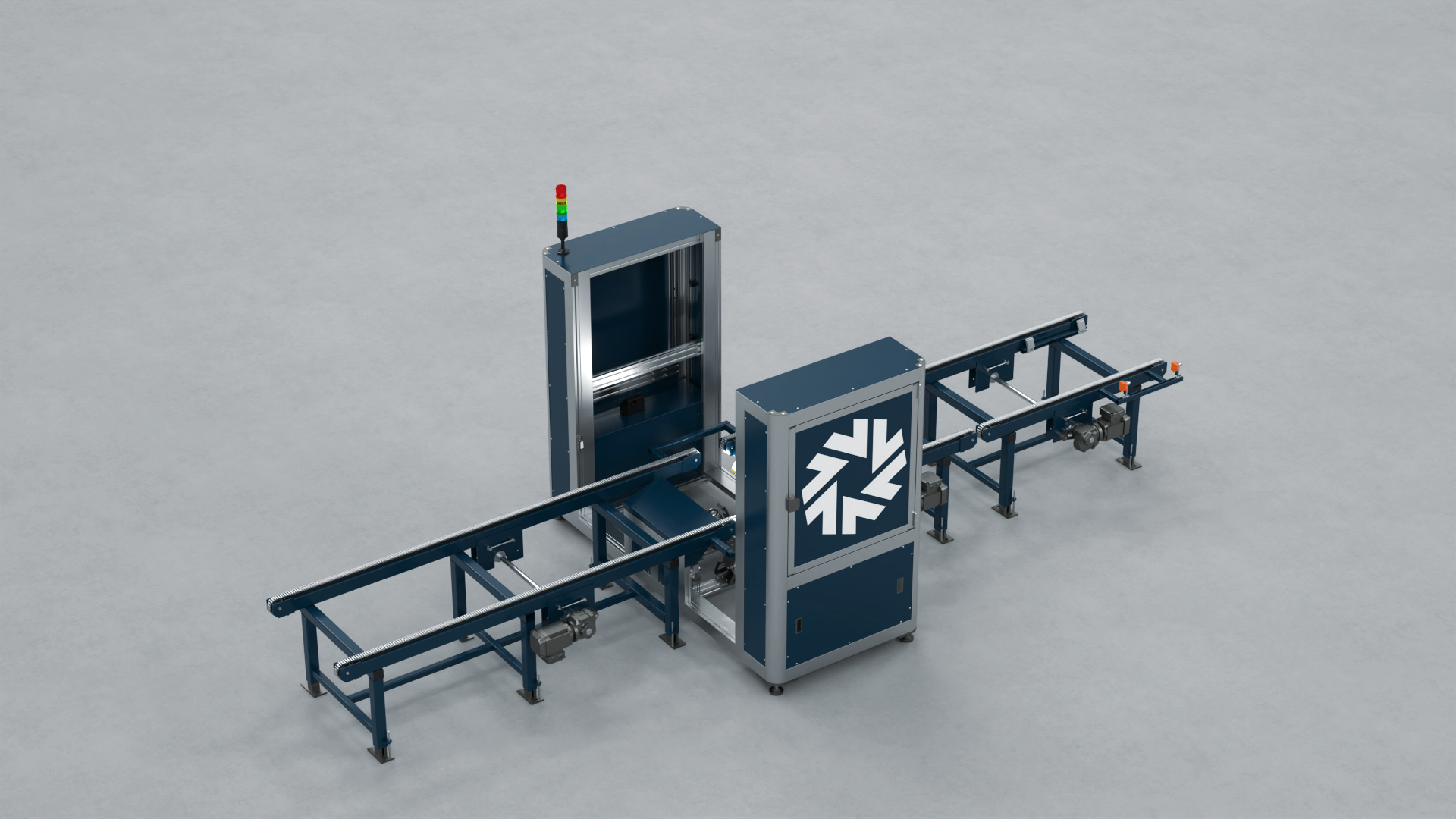
The CAB — PALLETAI for loaded pallet inspection.
Approximately 5 ft (1.5 m) of conveyor length. Actual throughput and layout depend on conveyor speed, pallet spacing and the handling sequence.
The CAB inspects accessible pallet areas to assess condition against your acceptance criteria. Depending on pallet type and dimensions, checks can include:
A conventional load profile checker measures load height and goods protruding beyond the pallet. Those checks are outside the scope described here. PALLETAI assesses the pallet, its components and relevant stretch-wrap issues.
A pallet suitable for one operation may be unsuitable for another.
PALLETAI supports common pallet configurations and sizes, with inspection criteria selected to match your automated handling requirements. Start with predefined inspection criteria or tailor tolerances to your specific application.
The aim is consistent decisions based on what your operation needs.
When evaluating an existing mechanical checking setup, consider both the checks you need and the information you want from them. PALLETAI provides inspection data that can help your team understand incoming pallet quality, investigate recurring defects and follow up with suppliers.
Results can be logged in IVISYSCloud and linked to a barcode or another identifier used in your WMS or WES. This provides a basis for comparing received pallets against agreed quality requirements and supporting claims or chargebacks where applicable.
Use the findings to address today’s rejected pallet—and improve tomorrow’s deliveries.
The inspection installation typically requires approximately 5 ft (1.5 m) of conveyor length. The final layout and inspection coverage depend on your conveyor design and pallet flow.
PALLETAI can operate without PLC communication, with results logged through IVISYSCloud and linked to the relevant identifier. Automatic routing to a reject lane or rework station requires a suitable connection to the material-handling controls.
Whether you are upgrading an existing facility or planning a new one, the inspection setup starts with your flow.
Incoming pallet quality deserves attention early in the design.
Where pallet support boards or system pallets are being considered to compensate for poor incoming pallet condition, inspection may help reduce that requirement. The opportunity depends on the handling system and any other functions those carriers perform.
Understanding the quality of pallets entering your site gives you a stronger basis for making that decision.
A load can meet your warehouse’s height and weight limits while the pallet underneath is unsuitable for automated handling.
PALLETAI inspects the pallet with goods still on it, checking its condition against the requirements of your conveyors, transfer units, cranes, and automated storage and retrieval system (AS/RS). Checks can include missing or broken boards, damaged blocks, exposed nails, component dimensions, and trailing stretch wrap.
The aim is to keep usable pallets moving while identifying those that could disrupt your operation. Acceptance criteria reflect your application and its tolerances.
No. The CAB is designed to inspect pallets with goods on them. Inspection coverage depends on which pallet areas are accessible and visible in the installation.
PALLETAI can be configured to inspect common pallet types, including CHEP, PECO, GMA and Euro pallets. Supported checks and acceptance criteria are defined for the pallet designs and sizes used in your operation.
Tell us which pallets you receive, and we’ll help define the inspection setup.
The CAB can inspect up to 800 loaded pallets per hour. Actual throughput depends on the installation, conveyor speed, pallet spacing and handling sequence.
PALLETAI provides a pass/fail result based on your inspection criteria. With the appropriate conveyor controls integration, a failed pallet can be routed to an existing reject lane or a manual rework station.
Your team can then assess the pallet and take the appropriate action, such as transferring the goods to a suitable pallet or using a pallet inverter where available. The handling process depends on your facility and equipment.
Integration with existing inbound conveyors is possible. Conveyor geometry, available space, pallet types and required inspection coverage need to be assessed.
Yes. Inspection criteria can be tailored to your operational requirements, using predefined criteria as a starting point where appropriate.
The scope described here does not include measuring goods height or load protrusions. PALLETAI assesses pallet dimensions, pallet condition and relevant stretch-wrap issues; load profile checking is a separate function.
Not for the operating mode where inspection results are logged through IVISYSCloud and linked to an identifier such as a barcode. Automatic rejection or routing needs an appropriate interface with the handling system.
Yes. Results linked to a pallet identifier can support follow-up of received quality against agreed requirements, including documentation for supplier discussions and applicable claims.
The business case starts with the cost of unsuitable pallets entering your automated flow: downtime, manual recovery work, disrupted deliveries and equipment damage.
Inspection can help identify unsuitable pallets earlier and provide data for supplier follow-up. For new facilities, it may also help reduce the need for additional pallet carriers where these are being considered specifically to compensate for poor incoming pallet quality.
To assess the potential value, consider your pallet volume, the frequency and duration of pallet-related stoppages, and the labor needed to resolve them. Share these figures with us, and we can discuss the business case for your operation.
“Pallet checker” can describe different checks at a warehouse infeed. A load profile checker measures the outline of the loaded unit, while a weighing system checks its weight.
PALLETAI inspects the condition of the pallet carrying the goods. It complements load profile and weight checks, helping identify pallet defects that those checks may not reveal.
No. A visible defect does not automatically make a pallet unsuitable for your operation.
PALLETAI applies agreed inspection criteria to distinguish acceptable wear and damage from defects outside your operating tolerances. This helps you avoid unnecessary rejection while identifying pallets that need attention before entering automation.
Send us a short description of your pallet types, inbound flow and the problems you want to address. We’ll help you assess where loaded pallet inspection could fit.
Send inquiry